


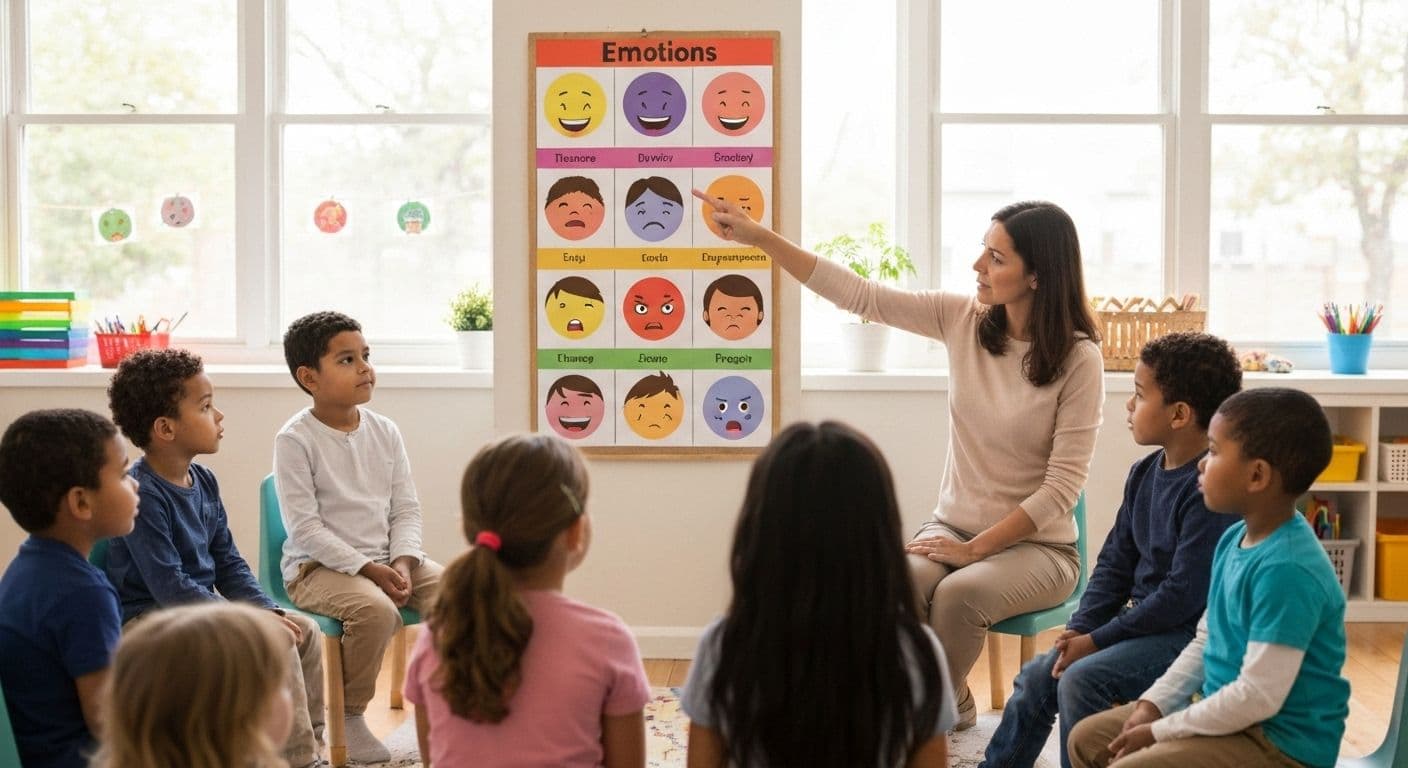
Self Awareness in Preschoolers: Why Naming Feelings Builds Success
Picture this: It's drop-off time at preschool, and Maya's favorite puzzle is already being used by another child. Instead of melting down or grabbing it away, she takes a breath and says, "I feel frustrated because I wanted that puzzle first." Her teacher helps her find another activity, and within minutes, Maya's engaged and happy. This simple moment of self awareness in preschoolers—the ability to identify and name emotions—creates a powerful foundation that transforms how children navigate kindergarten and beyond.
Research shows that preschoolers who develop emotional vocabulary handle classroom challenges with greater ease than their peers. When young children learn to name what they're feeling, they're building self awareness in preschoolers that directly impacts their readiness for formal schooling. This isn't just about being polite or well-behaved; it's about equipping little brains with the tools they need to learn, connect, and thrive in structured environments.
The science behind this connection is compelling. Children who can identify their emotions demonstrate better impulse control, stronger peer relationships, and improved focus during learning activities. As you'll discover, cultivating self awareness in preschoolers through simple daily practices creates measurable advantages that teachers notice immediately when these children enter kindergarten.
How Self Awareness in Preschoolers Shapes Classroom Success
Between ages three and five, children's brains undergo remarkable development in the prefrontal cortex—the area responsible for emotional regulation and decision-making. When preschoolers learn to name their feelings, they're literally building neural pathways that help them manage frustration, navigate transitions, and follow instructions more effectively.
Teachers consistently report that children with strong emotional vocabulary handle classroom challenges differently. When it's time to switch from playtime to circle time, emotionally aware preschoolers can identify that they feel disappointed about stopping an activity, which helps them process the transition rather than resist it. This emotional regulation skill becomes the foundation for kindergarten readiness.
Research on preschool emotional development shows that self awareness in preschoolers directly correlates with academic performance. Children who can identify when they're feeling confused are more likely to ask for help. Those who recognize when they're excited can channel that energy into learning activities rather than disruptive behavior. The cognitive ability to pause, name a feeling, and choose a response creates a significant advantage in structured learning environments.
Classroom Behavior Improvements
Kindergarten teachers notice immediate differences in children who arrive with developed emotional vocabulary. These students spend less time in conflict, follow multi-step directions more successfully, and recover from setbacks more quickly than peers who struggle to identify their emotional states.
Learning Engagement Benefits
When preschoolers understand their internal experiences, they engage more deeply with learning activities. Self awareness in preschoolers helps children recognize when they need a break, when they're ready to try something challenging, and when they're feeling confident—all crucial components of effective learning.
Building Self Awareness in Preschoolers Through Peer Relationships
The playground offers daily opportunities for emotional learning. When Liam accidentally knocks over Emma's block tower, her ability to say "I feel sad because my tower fell" instead of hitting creates an entirely different outcome. Self awareness in preschoolers transforms social conflicts into learning moments rather than escalating problems.
Children with emotional vocabulary develop empathy more naturally because they can recognize feelings in themselves and others. This connection between self awareness and social skills helps preschoolers make friends more easily and maintain those friendships with less adult intervention. They're equipped with tools to navigate disagreements before they escalate into physical conflicts.
Research on emotional intelligence in early childhood shows that self awareness in preschoolers reduces aggressive behavior significantly. When children can name feelings like anger, jealousy, or disappointment, they're less likely to express those emotions through hitting, biting, or other physical responses. This emotional vocabulary becomes their primary tool for social problem-solving.
Conflict Resolution Skills
Preschoolers who can identify their emotions work through peer conflicts more independently. Instead of needing constant adult mediation, they can communicate their feelings and understand when a friend needs space or an apology.
Friendship Development
Emotional awareness helps children form deeper connections. When preschoolers can express excitement about shared interests or comfort a friend who feels nervous, they build stronger, more meaningful friendships that carry into kindergarten.
Simple Daily Practices to Strengthen Self Awareness in Preschoolers
Building emotional vocabulary doesn't require elaborate activities or structured lessons. The most effective approach involves weaving feeling words into everyday moments throughout your day.
Start by modeling your own emotions out loud: "I feel frustrated because I can't find my keys" or "I'm feeling excited about our park visit." This simple practice of naming your feelings shows preschoolers how self awareness in preschoolers works in real situations.
During daily routines, ask simple questions that prompt emotional awareness: "How does your body feel right now?" at wake-up time, or "What feeling are you having about bedtime?" These small daily practices create consistent opportunities for children to identify and name their internal experiences.
Try these quick emotion-naming activities that take less than two minutes:
- Feeling faces during snack time: "Show me your happy face when you taste something yummy"
- Emotion check-ins during car rides: "Let's each name one feeling we're having right now"
- Bedtime feeling reflection: "What made you feel proud today? What made you feel frustrated?"
- Story character emotions: "How do you think the bunny feels in this picture?"
The key to developing self awareness in preschoolers lies in consistency rather than perfection. Even brief daily conversations about feelings create lasting impacts on emotional development. These small moments accumulate into significant advantages when your child enters kindergarten, equipped with the emotional vocabulary and self awareness that help them truly thrive.



