


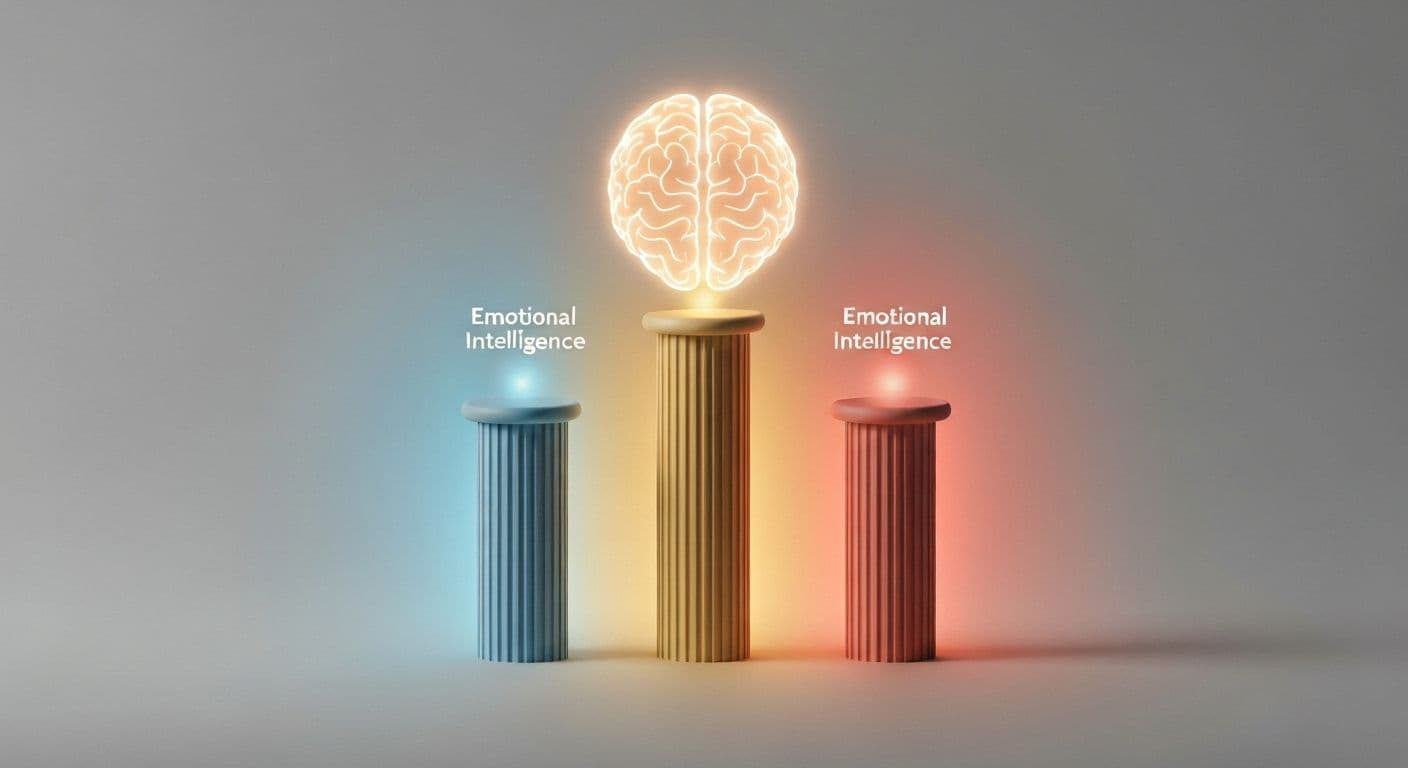
Self-Awareness, Self-Management, and Social Awareness: The 3 EQ Pillars
Ever met someone who's incredibly self-aware—they can tell you exactly why they're frustrated—but then they explode at the smallest inconvenience? Or maybe you know someone who keeps their cool beautifully but seems completely disconnected from what they're actually feeling inside? These scenarios reveal a crucial truth about emotional intelligence: it's not just about mastering one skill. Real emotional growth happens when you develop self awareness self management social awareness together, creating a balanced foundation that transforms how you navigate life's challenges.
Think of emotional intelligence like a three-legged stool. Each leg—self-awareness, self-management, and social awareness—supports the others. Remove one, and the whole thing topples. Yet many of us naturally gravitate toward developing just one or two pillars while neglecting the rest. Understanding how these three components of emotional intelligence work together reveals why balanced development matters so much more than excelling in just one area.
How Self-Awareness, Self-Management, and Social Awareness Work Together
Let's break down what each pillar actually means. Self-awareness is your ability to recognize and understand your emotions as they happen—noticing when frustration bubbles up or when anxiety starts creeping in. Self-management takes that awareness and applies it, helping you regulate those emotions rather than letting them control you. Social awareness rounds out the trio by enabling you to read and understand the emotions of others, picking up on subtle cues and perspectives beyond your own.
Here's where the magic happens: these emotional intelligence pillars don't just coexist—they actively fuel each other. Self-awareness feeds self-management because you can't regulate emotions you don't recognize. Both of these enable social awareness because understanding your own emotional landscape makes it exponentially easier to navigate social interactions and interpret what others are experiencing.
Picture this: Your colleague criticizes your work in a meeting. With balanced self awareness self management social awareness, you notice your immediate defensiveness (self-awareness), take a breath before responding (self-management), and recognize that your colleague seems stressed about an upcoming deadline (social awareness). This synergy lets you respond thoughtfully rather than reactively. Without all three pillars working together, that same scenario plays out very differently.
What Happens When Your Self-Awareness, Self-Management, or Social Awareness Is Imbalanced
When your EQ pillars working together fall out of balance, predictable patterns emerge. Understanding these scenarios helps you identify which areas need strengthening in your own emotional development.
Signs of Imbalanced Emotional Intelligence
High self-awareness but low self-management creates what I call the "enlightened reactor." You know exactly why you're angry, can articulate your frustration perfectly, and might even predict when you'll lose your temper—but you still do it anyway. This emotional intelligence imbalance leaves you feeling powerless despite your insights. You're watching yourself make choices you know aren't helpful, which amplifies frustration rather than reducing it.
Strong self-management but weak self-awareness produces the opposite problem: the "emotional suppressor." You've mastered keeping your cool on the surface, but you're disconnected from what's actually happening inside. You might pride yourself on never getting angry, but that's because you're pushing emotions down before you even recognize them. This approach works temporarily but eventually leads to burnout, unexplained physical symptoms, or sudden emotional overwhelm when suppressed feelings finally surface.
Good social awareness without self-awareness or self-management creates the classic people-pleaser pattern. You're incredibly attuned to everyone else's needs and emotions but lose touch with your own. You can read a room perfectly, adjust to others' moods effortlessly, and keep social situations smooth—but at the cost of your own emotional wellbeing. This imbalance makes you feel exhausted by social interactions and resentful of constantly accommodating others.
Why One Pillar Isn't Enough
Each scenario demonstrates why developing EQ pillars in isolation limits your emotional growth. Self-awareness without management leaves you stuck in analysis paralysis. Management without awareness means you're controlling emotions you don't understand. Social awareness without the other two turns you into an emotional chameleon who's lost their authentic self. The frustration you experience isn't from lacking emotional intelligence—it's from having an incomplete version of it.
Building Balance Across Self-Awareness, Self-Management, and Social Awareness
Ready to strengthen emotional intelligence across all three pillars? Start by identifying which area needs attention in your life right now. Notice which of those imbalanced scenarios resonated most—that's your clue.
For self-awareness, practice emotion labeling throughout your day. When you notice a feeling, name it specifically: "I'm feeling defensive" or "That's disappointment." This simple micro-habit builds your emotional vocabulary and recognition skills without requiring major time investment.
To develop self-management, use the three-second pause technique. When emotions spike, take three slow breaths before responding. This creates space between feeling and reaction, letting your prefrontal cortex catch up with your emotional response. It's not about suppressing emotions—it's about choosing your response rather than defaulting to autopilot.
Social awareness grows through perspective-taking exercises. In conversations, pause to consider: "What might this person be feeling right now?" This shifts your focus outward without losing touch with your own emotional state, creating the balanced awareness that makes social interactions more genuine.
The key to effective self awareness self management social awareness development is starting small across all three areas rather than perfecting one. Build incrementally, and you'll discover that strengthening one pillar naturally supports the others, creating the synergy that transforms emotional intelligence from a concept into a lived experience.



