


Social Emotional Learning Self Awareness: Middle School Friendships
Middle school changes everything. Suddenly, who sits with you at lunch feels more important than the test next period. Friendships become the emotional anchor that either steadies students through this turbulent time or leaves them feeling adrift. Here's what most educators miss: the quality of these friendships depends less on shared interests and more on something happening inside each student's mind. Social emotional learning self awareness gives middle schoolers the internal compass they need to build friendships that actually last.
When students understand their own emotional landscape, they stop accidentally sabotaging the relationships they care about most. That offhand comment that ruins a friendship? Usually comes from someone who hasn't learned to recognize when their anxiety is speaking instead of their actual feelings. The friend who always seems "too much" or "too distant"? Often just hasn't developed the awareness of personal boundaries that healthy relationships require. Teachers who create space for self-awareness development in their classrooms give students tools that transform how they connect with peers.
The middle school years represent a unique window where students are developmentally ready to think about their thinking, yet still open to guidance. This makes the classroom an ideal laboratory for practicing emotional intelligence before the stakes feel impossibly high.
How Social Emotional Learning Self Awareness Strengthens Middle School Friendships
Self-aware students possess a superpower their peers lack: they notice patterns. When Maya realizes she gets snappy with friends every time she feels left out, she stops blaming them for being "annoying" and starts addressing the actual issue. This awareness transforms conflicts from relationship-ending explosions into opportunities for deeper connection.
Understanding personal triggers helps middle schoolers respond thoughtfully rather than react impulsively during conflicts. Instead of firing back with something hurtful when a friend makes a thoughtless comment, self-aware students pause long enough to ask themselves: "Am I upset because of what they said, or because I'm already having a rough day?" This split-second of reflection changes everything.
Students who identify their own needs communicate more clearly with friends, reducing misunderstandings. Rather than expecting friends to read their minds, they learn to say, "I need some space right now" or "I'm feeling overwhelmed and could use someone to listen." This clarity eliminates the guessing games that destroy middle school friendships.
Recognizing personal strengths and growth areas builds confidence that translates into healthier peer relationships. When students understand what they bring to friendships, they stop trying to be someone they're not. This authenticity attracts genuine connections while repelling superficial ones.
Self-awareness also helps students notice when they're projecting their feelings onto others. That moment when you're convinced everyone is mad at you? Often reveals more about your internal state than actual friend behavior. Students who develop this insight spend less energy managing imaginary conflicts and more energy building real connections.
Classroom Strategies for Building Social Emotional Learning Self Awareness
Emotion check-ins at the start of class help students identify and name their current emotional state. This simple practice, taking just two minutes, teaches students that emotions shift throughout the day and deserve attention. Teachers who consistently ask, "What's your emotional weather right now?" normalize the practice of tuning into internal experiences.
Partner reflection exercises where students share how they handled recent social situations and receive peer feedback create safe spaces for growth. Structure these carefully: each student describes a friendship challenge, explains their response, and asks for one piece of constructive feedback. The confidence building that comes from both giving and receiving feedback strengthens social emotional learning self awareness across the board.
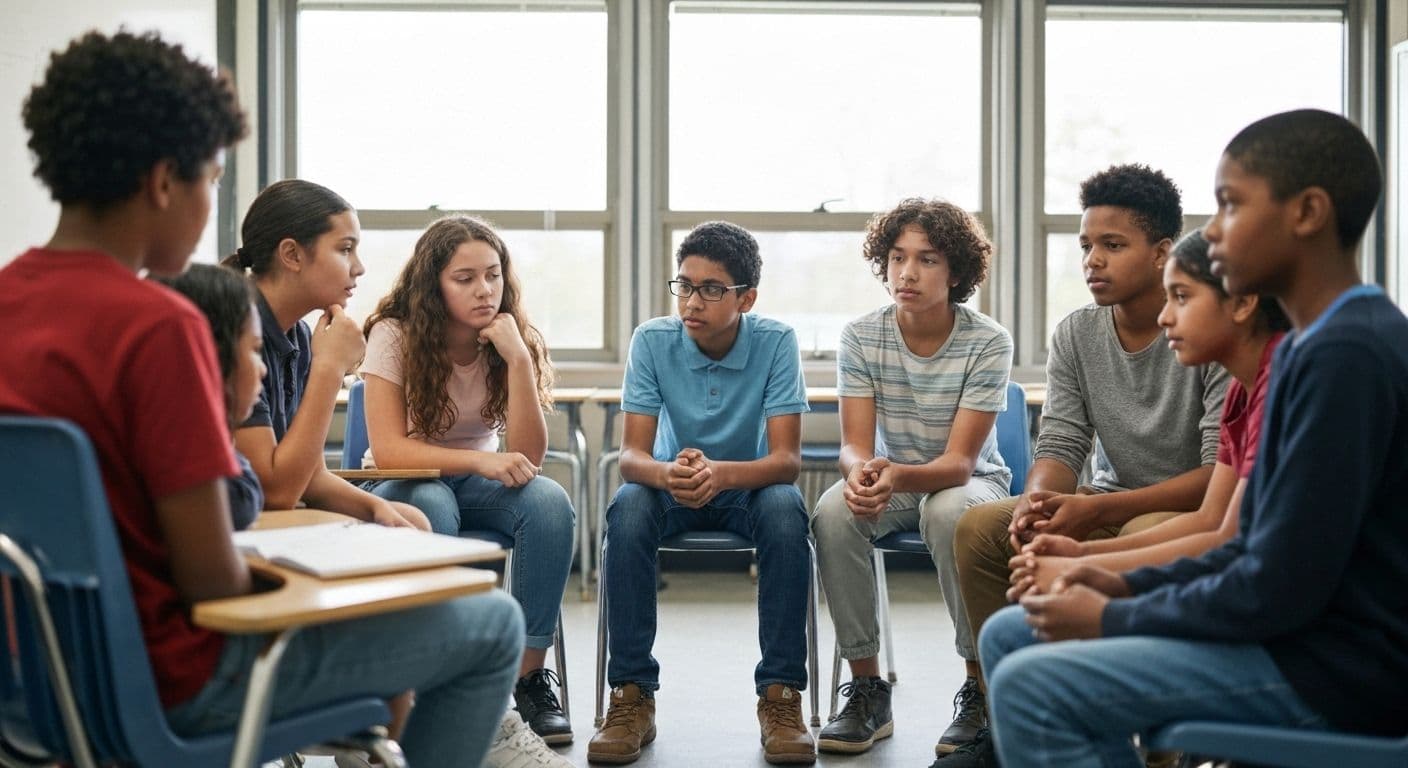
Group Reflection Activities
Role-playing activities that allow students to practice perspective-taking and recognize different emotional responses make abstract concepts concrete. Have students act out scenarios like "Your friend forgot your birthday" from multiple perspectives. This helps them understand that the same situation triggers different emotions in different people, building empathy alongside self-awareness.
Conflict Resolution Practices
Small group discussions focused on real middle school scenarios that require emotional awareness give students vocabulary for complex feelings. Present situations like "Two of your friends are fighting and both want you on their side" and facilitate conversations about the emotions involved. Students learn to identify feelings like loyalty, anxiety, and the fear of rejection that complicate friendship navigation.
Creating a classroom culture where naming emotions and discussing feelings becomes normalized rather than awkward requires consistency. When teachers regularly share their own emotional awareness, students learn that self-reflection isn't weird, it's essential. Simple statements like "I notice I'm feeling frustrated right now, so I'm going to take a breath before continuing" model the practice beautifully.
Practical Tools Teachers Use to Foster Social Emotional Learning Self Awareness Daily
Quick reflection prompts that take 2-3 minutes help students pause and assess their emotional state throughout the day. Questions like "What emotion am I feeling right now?" and "What does my body tell me about my emotional state?" build the habit of checking in with themselves. These micro-moments of awareness accumulate into significant self-understanding.
Conflict resolution frameworks that guide students to identify their feelings before addressing peer disagreements prevent reactive responses. Teach students to complete the sentence "I feel ____ because ____" before entering any difficult conversation. This simple structure transforms how middle schoolers navigate social challenges by ensuring emotions get acknowledged rather than suppressed.
Structured peer collaboration that builds trust while developing emotional awareness skills works best when teachers design activities requiring both task completion and emotional intelligence. Group projects that include reflection questions about collaboration dynamics teach students to notice their contributions and reactions in real-time.
The Ahead app provides bite-sized, science-driven tools that complement classroom SEL efforts and give students personalized support for developing social emotional learning self awareness beyond school hours. When students practice these techniques consistently, the impact on their friendships becomes unmistakable.



