


Teaching Self Awareness in Preschoolers: 3 Simple Strategies
Your four-year-old throws their snack across the kitchen, face red and fists clenched. When you ask what's wrong, they can't explain—they just know something feels big and uncomfortable inside. Sound familiar? Developing self awareness in preschoolers helps children understand these overwhelming moments and builds the foundation for lifelong emotional intelligence. The good news? You don't need fancy programs or expensive tools to teach these skills.
Research shows that self awareness in preschoolers—the ability to recognize and understand their own emotions—directly impacts how children handle frustration, build relationships, and navigate challenges as they grow. The three strategies outlined here work because they fit naturally into everyday moments: playground time, meals, and bedtime routines. Each technique is backed by neuroscience and designed for busy parents and educators who need practical, immediately actionable approaches.
These aren't complicated interventions requiring hours of preparation. Instead, they're simple language shifts and awareness practices you can start using today to strengthen self awareness in preschoolers through the moments you're already sharing together.
Strategy 1: Name and Label Emotions to Build Self Awareness in Preschoolers
The single most powerful tool for developing self awareness in preschoolers is emotion labeling—giving feelings specific names as they happen. When you say "You're feeling frustrated because your tower fell down," you're doing more than acknowledging the moment. You're teaching your child's brain to connect internal sensations with words, which is exactly how self awareness in preschoolers develops.
This technique works because naming emotions activates the prefrontal cortex, which helps regulate the emotional brain regions. Think of it as turning on a dimmer switch for big feelings. The more you practice emotion labeling strategies, the more naturally children begin identifying their own emotional states.
Playground Conflict Examples
When another child takes a toy, try: "I see you're feeling angry because you weren't finished playing. That's a normal feeling when something we want gets taken away." This simple narration builds self awareness in preschoolers by validating the emotion while teaching the vocabulary to describe it.
Mealtime Scenarios
During a mealtime meltdown, model your own emotions: "I'm feeling a bit overwhelmed right now because dinner got messy. I'm taking a deep breath to feel calmer." This demonstrates that everyone experiences emotions and shows practical ways to handle them, reinforcing self awareness in preschoolers through observation.
Strategy 2: Use Body Cues to Strengthen Self Awareness in Preschoolers
Preschoolers experience emotions physically before they can name them mentally. Teaching children to notice these body sensations creates a concrete pathway to developing self awareness in preschoolers. When you connect physical feelings to emotional states, you're giving children an internal compass they can use long before abstract emotional reasoning fully develops.
Try phrases like "Your shoulders are tight and your hands are squeezing—that's what frustration feels like in your body" or "Your tummy feels fluttery? That might be excitement!" These connections help children recognize emotional patterns, which is essential for building lasting self awareness in preschoolers. Similar to understanding body-emotion connections, this awareness transforms how children process their experiences.
Bedtime Routine Integration
Bedtime offers perfect opportunities for practicing body awareness. Ask "Does your body feel wiggly or calm right now?" or "Where do you notice the sleepy feeling—in your eyes, your arms, your legs?" These simple questions develop self awareness in preschoolers by teaching them to scan their internal landscape without judgment.
Physical Sensation Vocabulary
Build a simple vocabulary: tight, loose, fluttery, heavy, warm, tingly, buzzy. When children can describe physical sensations, they're developing the building blocks of emotional literacy and strengthening self awareness in preschoolers through embodied learning.
Strategy 3: Create Emotion Check-Ins to Maintain Self Awareness in Preschoolers
Regular emotion check-ins normalize talking about feelings and make self awareness in preschoolers a natural part of daily life rather than something reserved for crisis moments. The key is consistency over perfection—even brief check-ins create powerful habits when done regularly.
Transition moments work beautifully: after preschool pickup, before snack time, during car rides. Ask "How's your body feeling right now?" or "What emotion are you carrying with you from playtime?" These questions invite reflection without pressure, gradually building self awareness in preschoolers through consistent micro-practices.
Visual Emotion Tools
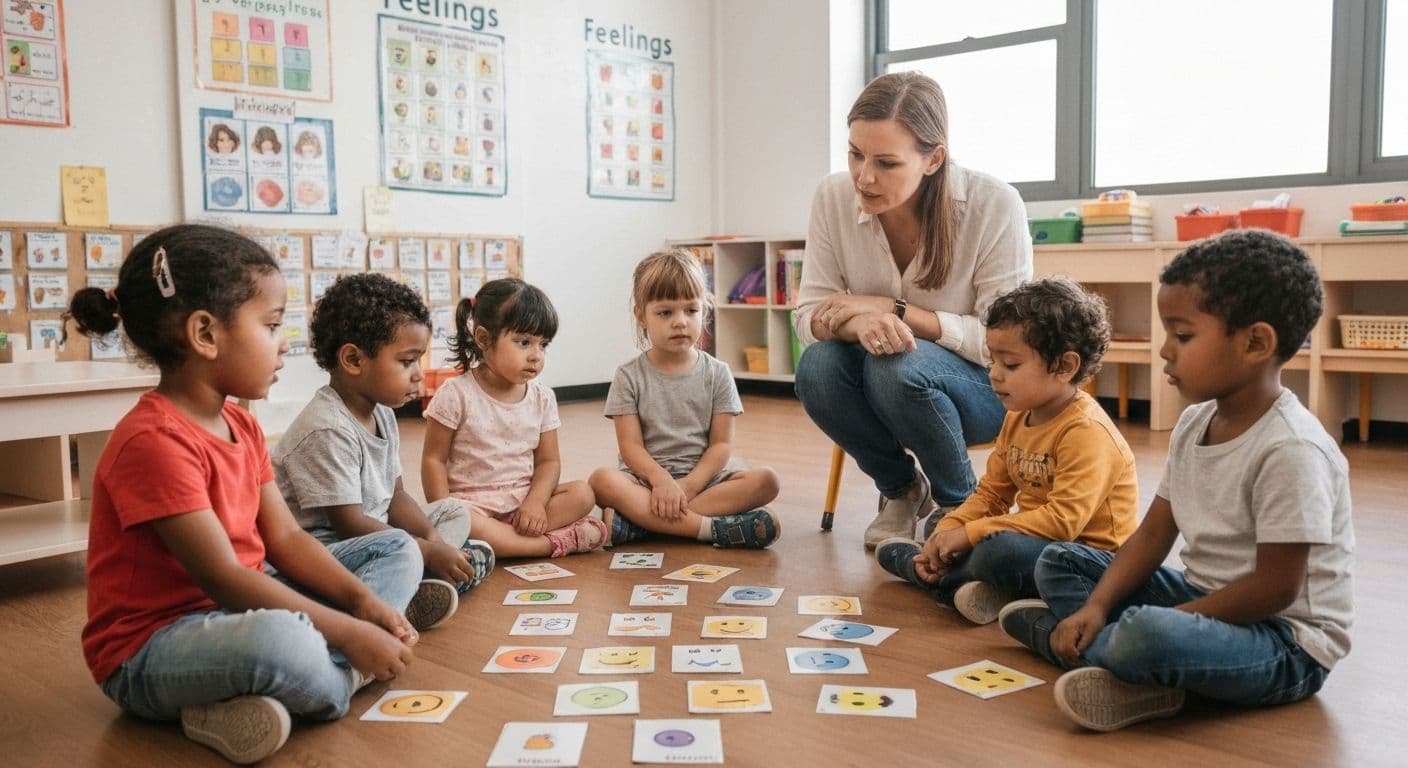
For pre-readers, visual supports make abstract emotions concrete. Use emotion face charts or color-coded feeling scales. Point and ask "Which face matches your feeling?" This approach meets preschoolers where they are developmentally while still fostering self awareness in preschoolers effectively.
Daily Routine Integration
Attach check-ins to existing routines: washing hands, buckling car seats, putting on pajamas. When self awareness in preschoolers becomes part of what you already do, it requires no extra time yet yields significant benefits. Remember, you're not aiming for perfect emotional articulation—you're building awareness one small moment at a time.
Teaching self awareness in preschoolers doesn't require elaborate programs or special training. These three strategies—naming emotions, connecting body cues, and creating regular check-ins—work because they fit naturally into the moments you're already sharing with young children. Start with one technique today, and watch as emotional understanding grows organically through everyday interactions.



