


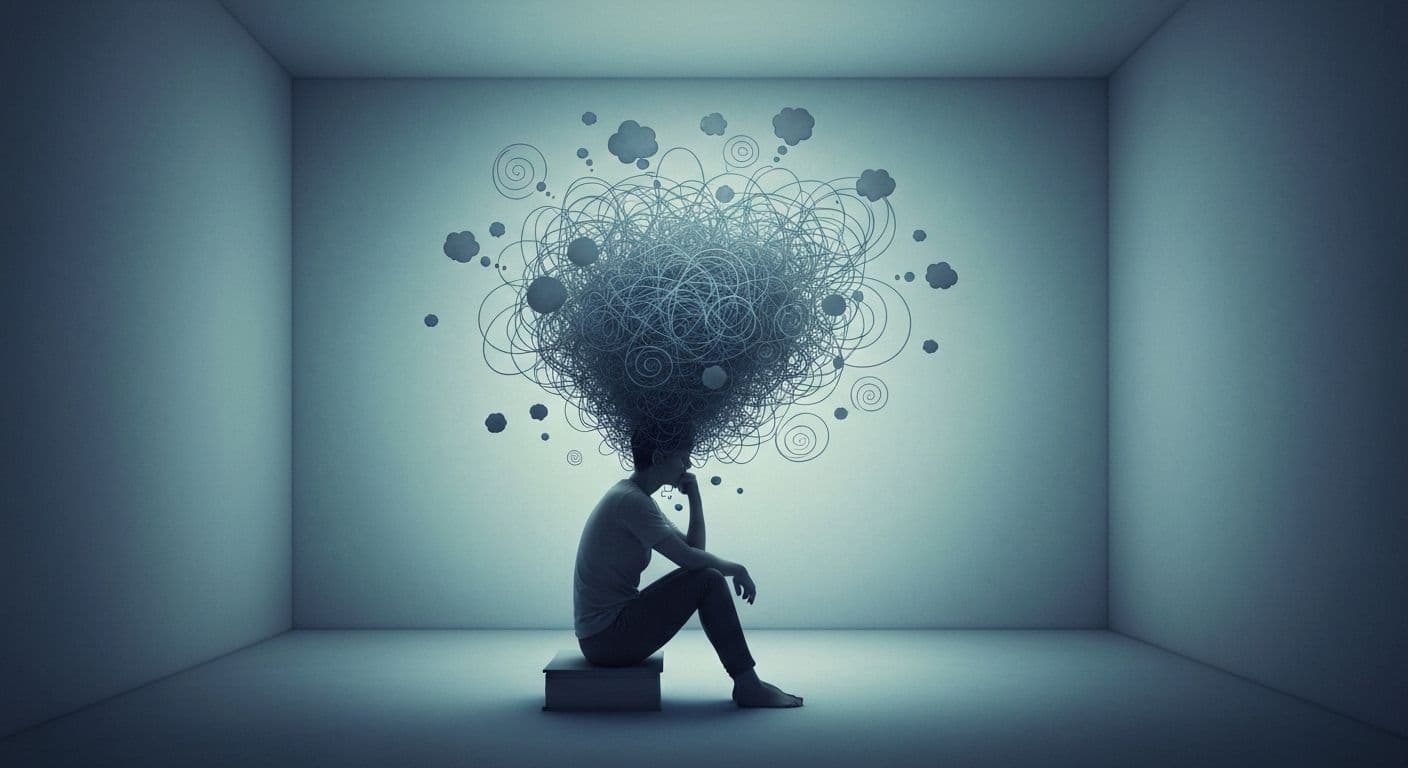
Too Much Self Awareness: Why Overthinking Your Emotions Makes Everything Worse
Picture this: You're lying in bed at 2 AM, mentally replaying a conversation from earlier. "Why did I get annoyed? Am I becoming an angry person? What does this say about me?" An hour later, you're still dissecting your emotions instead of sleeping. Sound familiar? Here's the twist: that self-awareness you've been cultivating—the one everyone says is so important—might actually be making things worse. Too much self awareness turns your mind into an endless feedback loop where you're constantly monitoring, analyzing, and second-guessing every emotion that surfaces. The result? You're not becoming more emotionally intelligent. You're becoming emotionally exhausted.
Self-awareness gets praised as the golden ticket to emotional growth, but there's a darker side nobody talks about. When you cross the line from healthy reflection into excessive self-monitoring, you activate your brain's threat detection system and create a mental prison of your own making. The difference between balanced awareness and too much self awareness is the difference between understanding your emotions and being paralyzed by them.
The Hidden Cost of Too Much Self Awareness
Here's what happens in your brain when self-monitoring goes into overdrive: Your prefrontal cortex—the analytical thinking center—hijacks your emotional experience. Instead of feeling anger and moving through it, you're watching yourself feel angry while simultaneously judging whether that anger is justified, appropriate, or revealing something terrible about your character. This constant emotional regulation effort actually amplifies anxiety rather than resolving it.
The science backs this up: Excessive self-monitoring activates the same neural pathways as threat detection. Your brain interprets all that internal scrutiny as a signal that something's wrong, which triggers more anxiety, which makes you monitor more intensely. It's a vicious cycle where too much self awareness feeds the very emotions you're trying to understand.
This creates what psychologists call "analysis paralysis" in emotional contexts. You become so busy dissecting your feelings that you can't actually respond to them. Someone cuts you off in traffic, and instead of experiencing a flash of irritation that passes naturally, you're stuck in your head: "Why am I so sensitive? Is this about control issues? Should I be practicing more patience?" Meanwhile, the authentic emotional experience—which would have lasted maybe 90 seconds—stretches into hours of mental exhaustion.
The cruelest irony? Too much self awareness creates distance from the very emotions you're trying to understand. You're analyzing feelings instead of feeling them, observing yourself instead of experiencing life. It's like trying to enjoy a meal while simultaneously writing a detailed review of every bite.
Signs You've Crossed Into Too Much Self Awareness Territory
Wondering if you've tipped into destructive rumination? Here are the telltale signs that your self-awareness habit has turned into emotional over-analysis.
First, you analyze your emotions more than you actually feel them. When something frustrates you, your immediate response is to start questioning and dissecting rather than simply acknowledging the frustration. You've become an observer of your emotional life rather than a participant in it.
Second, you second-guess every emotional reaction. "Should I be upset about this? Am I overreacting? What would a mentally healthy person feel right now?" This constant comparison and judgment exhausts your mental resources and prevents you from trusting your natural emotional responses.
Third, you feel mentally drained from monitoring your internal state. If checking in with your emotions feels like a full-time job rather than a quick temperature check, you've crossed into too much self awareness territory. Healthy reflection energizes you; destructive rumination depletes you.
Fourth, decision-making becomes agonizing because you're stuck in analysis mode. You can't choose what to eat for dinner without examining what your food preferences reveal about your emotional state. Simple choices become complex psychological investigations.
Finally, your relationships suffer because you're analyzing instead of connecting. You're so busy monitoring how you're coming across that you're not actually present. People can sense when you're in your head rather than engaged with them, creating the disconnection you were probably trying to avoid through all that self-awareness work in the first place.
Breaking Free From Too Much Self Awareness: Simple Mental Shifts That Work
Ready to break the cycle? These practical strategies help you move from paralysis to presence without abandoning self-awareness entirely.
Start practicing "noticing without analyzing." When an emotion surfaces, simply name it—"I'm feeling frustrated"—and stop there. No investigation into causes, no judgment about whether it's appropriate. Just acknowledgment. This trains your brain to recognize emotions without launching into exhaustive analysis.
Set time boundaries for emotional reflection. Give yourself five minutes to check in with your feelings, then move on. This prevents the endless spiral of overthinking while still honoring the need for self-awareness. When your mind tries to pull you back into analysis later, remind yourself: "I already thought about this."
Try the 5-second rule: Feel the emotion for five seconds without any mental commentary. No "why," no "what does this mean," just pure experience. This reconnects you with authentic emotional experiences and breaks the habit of immediate analysis.
Shift from "Why do I feel this way?" to "What do I need right now?" The first question leads to endless rumination. The second leads to action. When you catch yourself spiraling into analysis, redirect to needs and solutions instead.
Remember: what you do matters more than understanding every nuance of why you feel something. Too much self awareness keeps you stuck in your head. Balanced awareness helps you move forward with clarity and confidence.



