


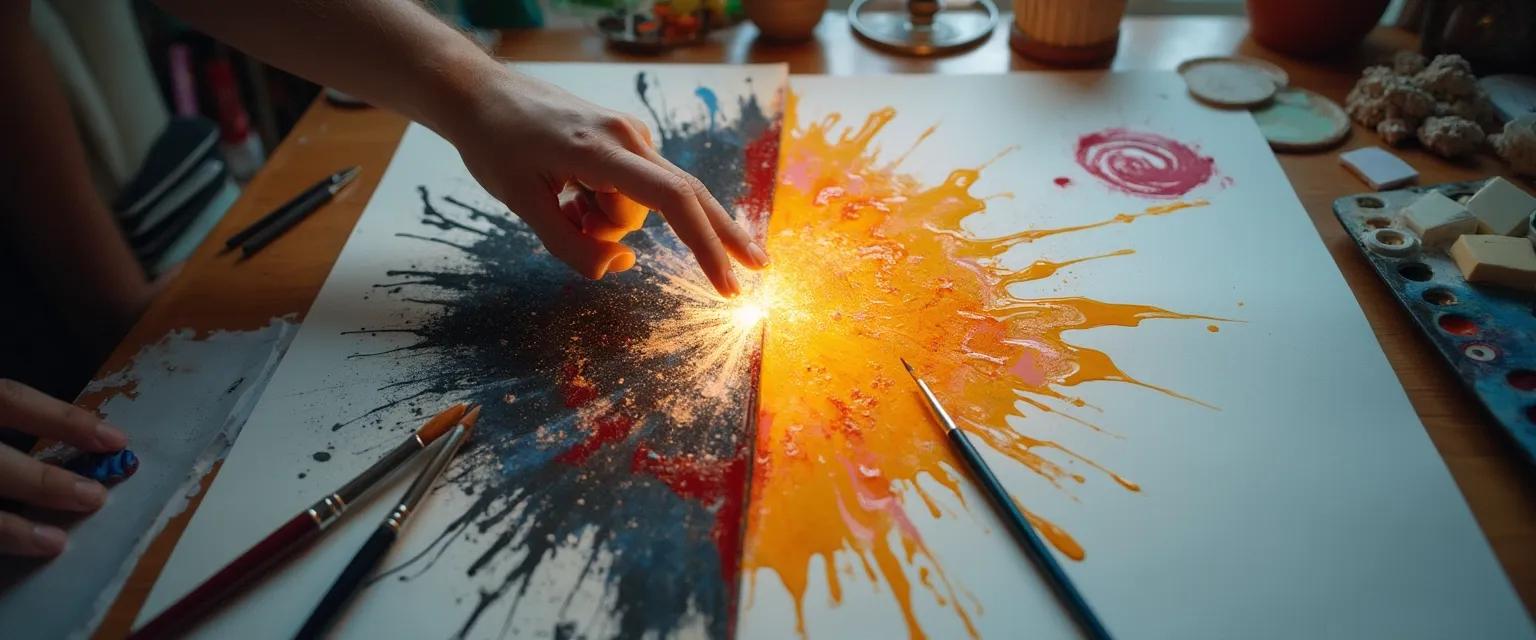
Unlock Creativity: How Beginner's Mind Breaks Through Artistic Blocks
Ever stared at a blank canvas with frustration building inside you? Creative blocks are the unwelcome guests that every artist encounters, turning your studio into a battleground of self-doubt. When inspiration dries up, it's time to explore the concept of beginner's mind—a powerful approach from Zen Buddhism that can transform your artistic practice. This beginner's mind philosophy (or "shoshin") invites you to approach your art with fresh eyes, as if experiencing everything for the first time—regardless of your expertise level.
The beginner's mind concept creates a foundation for creative breakthroughs by removing the constraints of what you "should" create and opening space for what you "could" create. When applied to art, this approach dissolves the pressure of perfection and reduces creative anxiety that often fuels artistic blocks. Artists who embrace beginner's mind find themselves noticing details, colors, and possibilities that experience had previously filtered out.
By releasing expectations and embracing curiosity, you'll discover that beginner's mind isn't about forgetting your skills—it's about seeing beyond them to unlock new creative dimensions.
The Beginner's Mind Approach to Seeing Art Differently
At its core, beginner's mind techniques in artistic practice involve approaching your work with wonder and openness—free from preconceptions about how things "should" look. Ironically, expertise can sometimes be our biggest creative obstacle. When we master techniques, we develop mental shortcuts that, while efficient, can limit exploration and innovation.
Pablo Picasso exemplified beginner's mind when he famously said, "It took me four years to paint like Raphael, but a lifetime to paint like a child." His cubist breakthroughs came from deliberately challenging his own expert perspective. Similarly, Georgia O'Keeffe broke through creative ruts by painting familiar flowers at unusual scales, seeing them with fresh eyes.
To cultivate your own beginner's mind approach, try these techniques:
- Use your non-dominant hand for quick sketches to disrupt muscle memory
- View your subject upside-down to break pattern recognition
- Ask "what if" questions about your standard techniques
- Temporarily abandon your signature style for experimentation
The most effective beginner's mind strategy might be changing your physical perspective. Photographer Dorothea Lange would sometimes lie on the ground or climb to unusual vantage points to discover fresh perspectives that revitalized her seeing.
Simple Beginner's Mind Exercises to Break Creative Blocks
Let's explore practical beginner's mind exercises you can implement immediately when facing creative blocks. Before starting your art session, try this five-minute beginner's mind warm-up: close your eyes, take three deep breaths, and imagine you've never held your art tools before. When you open your eyes, notice the weight, texture, and potential of your materials as if encountering them for the first time.
The "first time seeing" exercise transforms familiar subjects. Choose something you've drawn or painted dozens of times—a favorite mug, a houseplant, or a local landscape. Now challenge yourself to identify five details you've never noticed before. This beginner's mind practice reveals how much our brains filter out through familiarity.
Constraint paradoxically fuels beginner's mind thinking. Try limiting yourself to just three colors, one tool, or a tiny canvas. These restrictions force creative problem-solving and mindful artistic decisions that bypass your usual patterns.
To incorporate beginner's mind into your regular practice, dedicate one session weekly to pure experimentation where "mistakes" are reframed as discoveries. Document these explorations—they often contain the seeds of your next creative breakthrough.
Transforming Your Art Practice with Beginner's Mind
The long-term benefits of maintaining a beginner's mind approach extend beyond breaking occasional creative blocks. Artists who regularly practice beginner's mind report greater resilience, more distinctive personal styles, and deeper satisfaction with their creative process.
The key is balancing technical expertise with beginner's curiosity. Your skills provide the foundation, while beginner's mind supplies the spark that keeps your work fresh. This balanced approach prevents both technical sloppiness and creative stagnation.
Ready to transform your art practice? The beginner's mind is always accessible—it requires no special equipment, just a willingness to see differently. The next time you face a creative block, remember that the solution might not be pushing harder with what you know, but stepping back into the wonder of what you don't. By embracing beginner's mind, you'll discover that creative blocks aren't dead ends—they're invitations to explore new artistic territories.



