


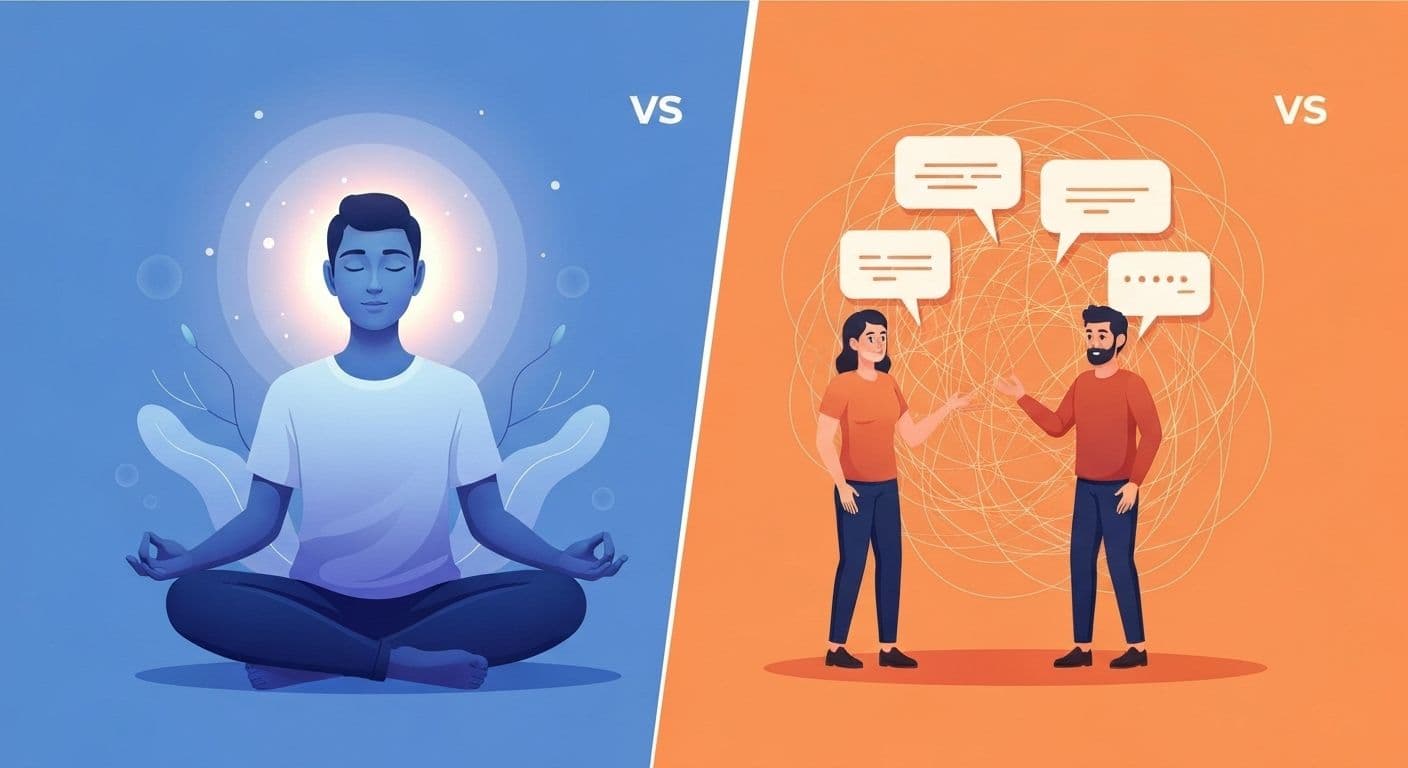
Why Mind Meditation Works Better for Emotional Regulation Than Venting
Picture this: You've had a rough day at work, your boss criticized your project, and you immediately text your best friend to vent. You spend 45 minutes dissecting every detail, feeling validated and understood. But the next morning, that same knot of frustration sits right back in your chest. Sound familiar? While venting to friends provides temporary relief, mind meditation creates lasting emotional regulation by building internal processing systems that stick around long after the conversation ends.
Here's the thing: external venting feels productive because it releases emotional pressure in the moment. But mind meditation works differently—it rewires how your brain processes emotions from the ground up. Research shows that regular meditation practice strengthens the prefrontal cortex, the brain region responsible for emotional regulation, while venting often reinforces the same reactive patterns we're trying to escape. The question isn't whether friends matter (they absolutely do), but why processing emotions internally through mindfulness techniques creates more sustainable emotional resilience than relying solely on social support.
How Mind Meditation Builds Self-Reliance in Emotional Management
Mind meditation trains your brain to observe emotions without immediately reacting to them. When you sit with frustration during meditation, you're literally teaching your neural pathways to pause between feeling and response. This creates what neuroscientists call "cognitive flexibility"—your brain's ability to shift perspectives and choose responses rather than defaulting to automatic reactions.
The neurological changes happen faster than you'd think. Studies using fMRI scans show that just eight weeks of consistent meditation practice increases gray matter density in the prefrontal cortex while decreasing activity in the amygdala, your brain's emotional alarm system. You're essentially building a stronger emotional regulation tool that travels with you everywhere.
Contrast this with venting, which creates external dependency for emotional relief. When you habitually process feelings by talking them out, your brain learns to seek outside validation before finding internal resolution. It's not that friends can't help—they can—but relying exclusively on social venting means you're essentially outsourcing your emotional management system.
Here's a practical example: Imagine your coworker takes credit for your idea during a meeting. With mind meditation as your foundation, you can pause in the bathroom, take three mindful breaths, observe the anger without judgment, and choose your response. Without that internal processing skill, you're stuck carrying that frustration until you can vent to someone later, letting it compound throughout the day.
When Mind Meditation Outperforms Social Venting for Emotional Processing
Mind meditation works better than social venting in specific scenarios, particularly with recurring frustrations. If you're repeatedly venting about the same workplace conflict or relationship pattern, you're likely reinforcing negative thought loops rather than resolving them. Each retelling strengthens the neural pathways associated with that frustration, making the emotional pattern harder to break.
Venting can perpetuate rumination cycles—that mental replay where you rehash the same situation from every angle. Research on emotional processing reveals that talking about distressing events without internal reflection often increases emotional reactivity rather than reducing it. You're essentially practicing being upset.
Mind meditation breaks this cycle by helping you observe thoughts without getting caught in them. When you notice "I'm thinking about that argument again" during meditation, you're creating distance from the thought itself. This metacognitive awareness—thinking about your thinking—reduces emotional charge more effectively than talking alone.
There's also the validation trap to consider. When you vent, you're often seeking external confirmation that your feelings are justified. While validation feels good, it builds dependency on others to determine whether your emotional responses are "correct." Mind meditation helps you develop internal emotional authority—trusting your own ability to process and validate your experiences without external approval.
Combining Mind Meditation with Strategic Conversation for Lasting Emotional Resilience
The most effective approach isn't choosing between mind meditation and talking to friends—it's using meditation first to process, then selectively sharing insights. When you meditate before venting, you transform reactive complaining into productive problem-solving conversations. You're no longer dumping raw emotions on friends; you're sharing processed insights and seeking specific input.
Try this actionable technique: Before texting that friend about your frustration, commit to five minutes of mind meditation. Sit with the emotion, notice where you feel it in your body, observe the thoughts attached to it. Then ask yourself: "Do I still need to talk about this, or did the internal processing shift something?" You'll be surprised how often the urge to vent dissolves once you've given yourself space to process internally.
This approach also transforms the quality of your conversations. Friends appreciate focused discussions about specific challenges rather than circular venting sessions. You're building deeper emotional intelligence while maintaining meaningful relationships.
Building consistent mind meditation habits creates the foundation for all emotional work. Start with just five minutes daily, focusing on breath awareness. As your internal processing muscles strengthen, you'll notice emotions feel less overwhelming and your need for constant external validation naturally decreases. You're developing emotional wisdom that compounds over time—an internal ally that's always available, never too busy, and grows stronger with every practice session.



