


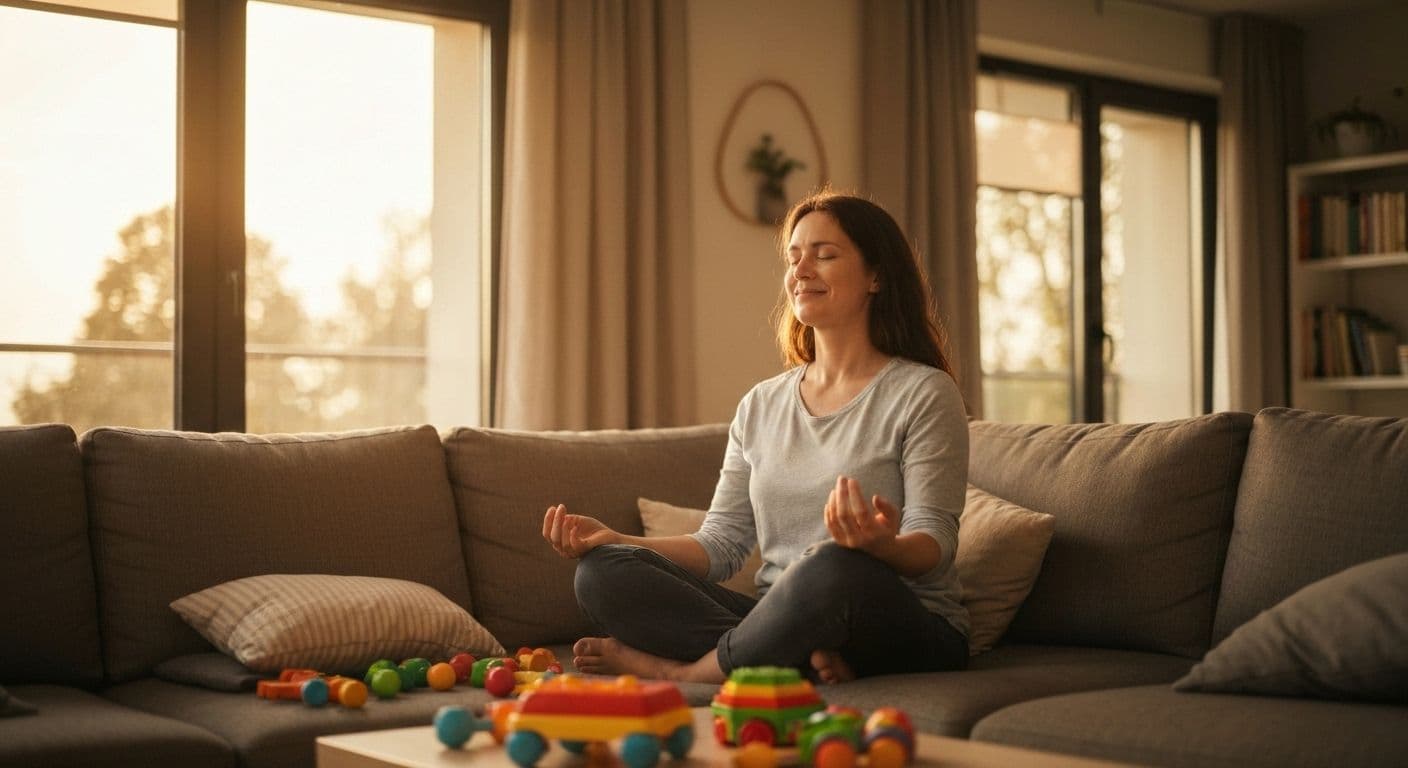
Why Mindful Elevation Works Better Than Meditation for Busy Parents
You're three minutes into hiding in the bathroom, pretending to use the toilet while your toddler screams for juice and your teenager slams a door upstairs. Someone on Instagram just posted about their "transformative 20-minute morning meditation practice," and you want to laugh—or cry. When you can't find 20 seconds of silence, meditation feels like a fantasy designed for people who don't have your life. That's where mindful elevation changes everything. Unlike traditional meditation, mindful elevation doesn't ask you to pause your chaos. Instead, it transforms your everyday parenting moments into powerful opportunities for emotional relief for parents who need it most.
The core problem with meditation for busy parents isn't motivation or desire—it's the fundamental requirements. Meditation demands time you don't have, silence that doesn't exist in your home, and stillness that contradicts the constant motion of parenting. Mindful elevation takes a radically different approach. This practice works with your reality, not against it, turning diaper changes, school drop-offs, and even tantrums into moments of emotional regulation. Ready to discover why this mindfulness approach fits seamlessly into the life you're actually living?
What Makes Mindful Elevation Different from Traditional Meditation
Traditional meditation asks you to sit still, close your eyes, and focus inward for extended periods. Mindful elevation flips this entirely—it's awareness-in-action rather than awareness-in-stillness. While meditation requires you to step away from your life, mindful elevation happens during your life. You practice while cooking dinner, driving to soccer practice, or playing blocks with your four-year-old. This isn't a compromise or a lesser version of meditation. It's a fundamentally different approach designed for people who live in motion.
Consider the difference: A meditation session might require 20 uninterrupted minutes. A mindful elevation moment takes 20 seconds and happens right in the middle of whatever you're already doing. The science backs this up beautifully. Research shows that brief awareness practices activate the same neural pathways as longer meditation sessions. Your brain doesn't distinguish between a formal meditation session and a mindful elevation moment—both strengthen your prefrontal cortex and regulate your amygdala, the brain's emotional control center.
The Neuroscience Behind Brief Awareness Practices
When you engage in mindful elevation, you're not getting a watered-down version of meditation benefits. You're accessing the same neurological mechanisms through a different door. Each brief moment of elevated awareness strengthens neural connections that support emotional regulation and stress resilience.
Real-World Application Examples
Mindful elevation doesn't need apps, meditation cushions, or perfect conditions. You practice it while wiping counters, waiting at red lights, or folding the endless mountain of laundry. This accessibility makes it sustainable in ways that traditional meditation simply isn't for most parents.
How Mindful Elevation Fits Into Your Parenting Reality
Let's get practical. Mindful elevation techniques transform the moments you're already living through into opportunities for emotional wellness. During a diaper change, instead of mentally racing through your to-do list, you take three conscious breaths and notice the weight of your baby, the softness of their skin. At school drop-off, while your child dawdles and you're watching the clock, you practice the "elevation" component—mentally zooming out to see this small moment within the bigger picture of your parenting journey.
Parenting triggers like tantrums, spilled milk, or defiant behavior become your practice ground. When your child refuses to put on shoes for the third time, mindful elevation gives you a tool for in-the-moment emotional regulation. You don't need to leave the situation, count to ten in another room, or wait until bedtime to process your frustration. Instead, you elevate your perspective right there in the hallway, still holding the shoes, but seeing the situation from a higher vantage point.
This approach provides immediate relief without pausing your day. You're not choosing between parenting and self-care—you're integrating them. Each micro-practice builds your emotional resilience more effectively than sporadic meditation sessions. Think of it like building strength through small wins—consistency matters more than duration.
Converting Daily Routines Into Practice Opportunities
Bedtime routines, meal preparation, bath time—these aren't interruptions to your mindfulness practice. They are your mindfulness practice. This shift in perspective changes everything about how sustainable your emotional wellness strategies become.
Managing Parenting Frustration in Real-Time
When frustration hits, mindful elevation offers immediate strategies for stress management for parents. You don't wait for the perfect moment to address your emotional state—you address it in the imperfect, chaotic moment where it's actually happening.
Getting Started with Mindful Elevation Today
Ready to try your first mindful elevation technique? Here's the "3-breath perspective shift" you can use immediately: Next time you feel frustration rising, take three deliberate breaths while imagining you're zooming out like a camera, seeing yourself and your child from above, then from across the room, then from outside your house. This simple practice interrupts your stress response and activates your rational brain in under 10 seconds.
Mindful elevation grows stronger with each use. Unlike meditation, which often feels like starting from zero each session, mindful elevation builds momentum. Each time you practice, you're strengthening the same neural pathways, making the next moment of awareness easier to access. The compound effect is remarkable—five mindful elevation moments throughout your day create bigger changes than one 30-minute meditation session you'll probably skip because bedtime went sideways.
Start with just one daily routine as your practice anchor. Maybe it's morning coffee or the drive to daycare. This single consistent moment becomes your foundation, and from there, mindful elevation naturally expands into other parts of your day. You're not trying to become someone who meditates perfectly. You're meeting yourself exactly where you are—in the beautiful, messy middle of raising humans—and finding moments of peace and perspective right there.



