


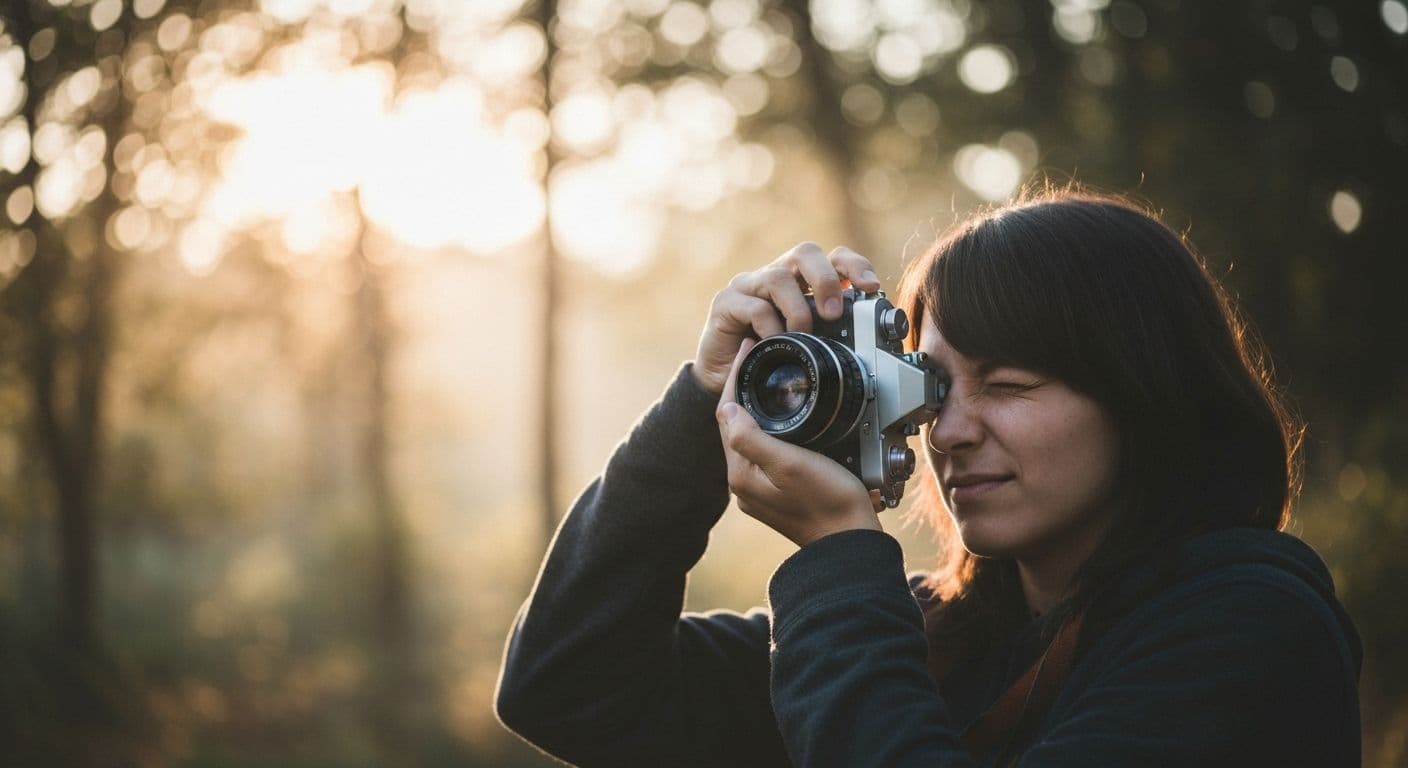
Why Mindful Photography Matters For Emotional Regulation | Mindfulness
You're stuck in traffic, and you feel that familiar heat rising in your chest—frustration building with every minute that ticks by. Your mind starts spiraling: "I'm going to be late again. Why does this always happen to me?" Sound familiar? What if, in that moment, you pulled out your phone and started noticing the way sunlight hits the car ahead of you, or the interesting patterns in the clouds above? This is mindful photography, and it's more than just a creative hobby—it's a powerful emotional regulation tool that works when you need it most.
Unlike traditional stress relief methods that require you to step away from your day, mindful photography meets you exactly where you are. By combining the principles of mindfulness techniques with the simple act of observing through a camera lens, this practice helps you manage emotions in real-time. The beauty? You already have everything you need right in your pocket.
This approach goes beyond snapping pretty pictures. It's about using your camera as a bridge between overwhelming feelings and emotional clarity, building your emotional intelligence one frame at a time.
How Mindful Photography Creates Emotional Distance
Here's what happens in your brain when you shift from feeling to observing: the moment you look through a camera lens, you activate your prefrontal cortex—the part responsible for logical thinking and emotional regulation. This neurological shift interrupts the emotional spiral before it takes over completely.
Think of it as pressing pause on your internal drama. When you're searching for the perfect angle or adjusting focus, your attention naturally moves from your overwhelming feelings to the visual world around you. This isn't avoidance—it's strategic redirection. You're still present with your experience, but now you're viewing it from what psychologists call the "observer perspective."
This observer stance is where the magic happens. Instead of being inside your anger or frustration, you're creating space around it. You're not fighting the emotion or pretending it doesn't exist. You're simply choosing to regulate mood by engaging with something outside yourself. The camera becomes your anchor, pulling you back from the edge of emotional overwhelm and grounding you in the present moment.
Research shows that this kind of attention shift reduces activity in the amygdala—your brain's alarm system—while increasing activity in areas associated with awareness and self-regulation. In other words, mindful photography literally helps rewire your emotional responses over time.
Practical Mindful Photography Techniques for Managing Difficult Emotions
Ready to turn your phone into an emotional regulation tool? These mindful photography techniques work best when you're actually feeling something difficult—not as a preventive measure, but as an in-the-moment intervention.
Quick Photography Exercises for Anger
The 5-Photo Reset is your go-to when frustration hits. Here's how it works: commit to taking five photos of five different things within your immediate surroundings. Don't overthink it—a doorknob, a shadow, your coffee cup, whatever catches your eye. The rule? Each photo must be of something different. This forces your brain to actively search and observe, breaking the cycle of repetitive angry thoughts. By photo five, you'll notice your breathing has slowed and that tight feeling in your chest has loosened.
Using Your Phone Camera for Emotional Wellness
The Color Focus Method works wonders for shifting emotional states. Pick one color—let's say blue—and spend three minutes photographing only blue objects. This targeted search activates your reticular activating system, essentially telling your brain, "We're looking for blue now, not replaying that argument." It's a simple redirect that helps manage difficult emotions without forcing yourself to "just calm down."
The Texture Hunt grounds you through visual exploration. Focus your lens on textures—rough, smooth, bumpy, soft. Get close. Really close. This technique engages your senses and pulls you out of your head and into your body. When you're examining the grain of wood or the weave of fabric, you're practicing presence.
Finally, try the Perspective Shift Practice. Take the same subject from three drastically different angles—above, below, and straight on. As you physically change your viewpoint, you're training your brain to recognize that emotional viewpoints can shift too. What feels overwhelming from one angle might look manageable from another.
Building Your Mindful Photography Practice for Lasting Emotional Intelligence
The real power of mindful photography practice shows up with consistency. Start by choosing just one technique to use during your next difficult moment. That's it—one technique, one challenging situation. Notice what happens to your emotional state.
Over time, these small interventions compound. You're not just managing individual moments of distress; you're building neural pathways that support better emotional regulation overall. Your brain learns that difficult emotions don't have to spiral, that you have tools for managing overwhelming situations right at your fingertips.
The best part? This practice grows with you. As your emotional intelligence develops, you'll naturally find new ways to use mindful photography for mood management. You're not learning a rigid system—you're discovering a flexible tool that adapts to whatever you're facing.
Your camera is always with you, which means your emotional regulation tool is too. Next time you feel that familiar overwhelm creeping in, remember: you've got this, and you've got mindful photography to help you through it.



