


Why Mindfulness Exercises For Anxiety Sometimes Backfire | Mindfulness
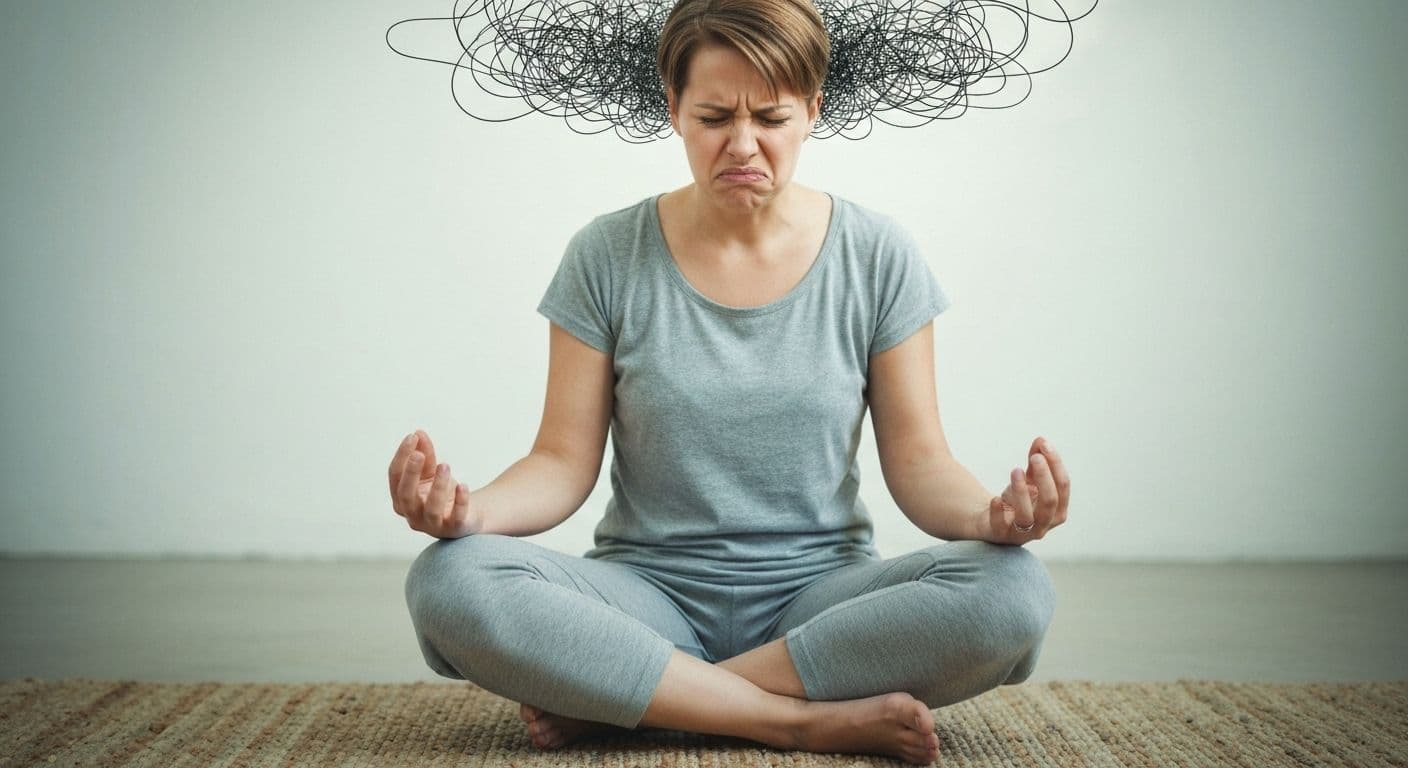
Picture this: You settle onto your meditation cushion, close your eyes, and try to focus on your breath. Within seconds, your mind floods with worries. Your heart races. That knot in your chest tightens. You open your eyes feeling more anxious than when you started. Sound familiar? You're not alone, and here's the surprising truth: traditional mindfulness exercises for anxiety don't work for everyone. In fact, they sometimes make things worse. This isn't about doing it wrong—it's about understanding that anxious brains need different approaches. Let's explore why standard practices backfire and discover what actually works for chronically anxious minds.
The counterintuitive reality is that sitting still with your thoughts can amplify anxiety rather than calm it. When you're already struggling with racing thoughts and physical tension, anxiety management requires a different strategy than what's typically recommended.
Why Standard Mindfulness Exercises for Anxiety Can Increase Symptoms
Here's the paradox that catches many people off guard: focusing inward when you're anxious can actually amplify those anxious thoughts. When you sit down to meditate, you're essentially removing all external distractions and creating space for your anxiety to grow louder. It's like turning up the volume on an already noisy radio station.
Research identifies a phenomenon called "relaxation-induced anxiety," where attempting to relax triggers the opposite response. Your nervous system interprets the sudden stillness as something unfamiliar and potentially threatening. For someone with chronic anxiety, sitting quietly becomes a spotlight that illuminates every worry, every physical sensation, every uncomfortable thought you've been trying to manage throughout your day.
Traditional mindfulness requires emotional bandwidth that anxious minds simply don't have in the moment. When your brain is already working overtime processing threats (real or perceived), asking it to also observe thoughts non-judgmentally becomes an impossible task. It's like asking someone to learn calculus while running from a bear—the timing just doesn't work.
The standard instruction to "notice your thoughts without judgment" sounds simple, but for anxious people, awareness can quickly become hyperawareness. You start noticing your racing heart, which makes you notice your shallow breathing, which triggers more anxiety about having anxiety. This creates a feedback loop that intensifies rather than reduces symptoms.
Having a setback with mindfulness doesn't mean you're broken or doing it wrong. It means the traditional approach isn't designed for how your particular brain processes stress and anxiety. Understanding this distinction changes everything about how you approach stress reduction practices.
Alternative Mindfulness Exercises for Anxiety That Actually Work
Movement-based mindfulness transforms the practice for anxious minds. Instead of sitting still, try walking slowly while noticing the sensation of your feet touching the ground. This gives your nervous system something concrete to focus on while burning off anxious energy. Walking mindfulness redirects that restless feeling into purposeful movement.
Micro-mindfulness moments work better than extended sessions. Rather than forcing yourself through 20-minute meditations, try 30-second awareness breaks throughout your day. Notice three things you can see right now. Feel your feet on the floor. These brief check-ins build emotional awareness without overwhelming your system.
Sensory grounding techniques redirect focus outward instead of inward, which is exactly what anxious brains need. The 5-4-3-2-1 technique is particularly effective: identify five things you can see, four you can touch, three you can hear, two you can smell, and one you can taste. This anchors you in the present through external observation rather than internal monitoring.
The "distraction first, awareness second" approach acknowledges that sometimes you need to shift your mental state before you can observe it. Engage in an absorbing activity—folding laundry, organizing a drawer, doodling—then notice how you feel. This indirect path to mindfulness removes the pressure that makes traditional practices backfire.
Ready to try something immediately? Place your hand on your chest and count five slow breaths. Then stand up and name every blue object you can see in the room. These simple mindfulness techniques give your brain concrete tasks that naturally reduce anxiety.
Building Your Personal Mindfulness Practice for Anxiety Management
Effective mindfulness exercises for anxiety look different for everyone, and that's perfectly okay. Your practice might involve dancing, drawing, or walking—anything that helps you connect with the present moment without amplifying anxious thoughts. The key insight to remember is that outward-focused practices typically work better for anxious minds than inward-focused ones.
Experiment with various approaches without pressuring yourself to master traditional meditation. You're not looking for perfection; you're discovering what actually helps your unique brain find calm. These alternative mindfulness exercises for anxiety give you practical tools that work with your nervous system, not against it. Start with one technique today and notice what shifts.



