


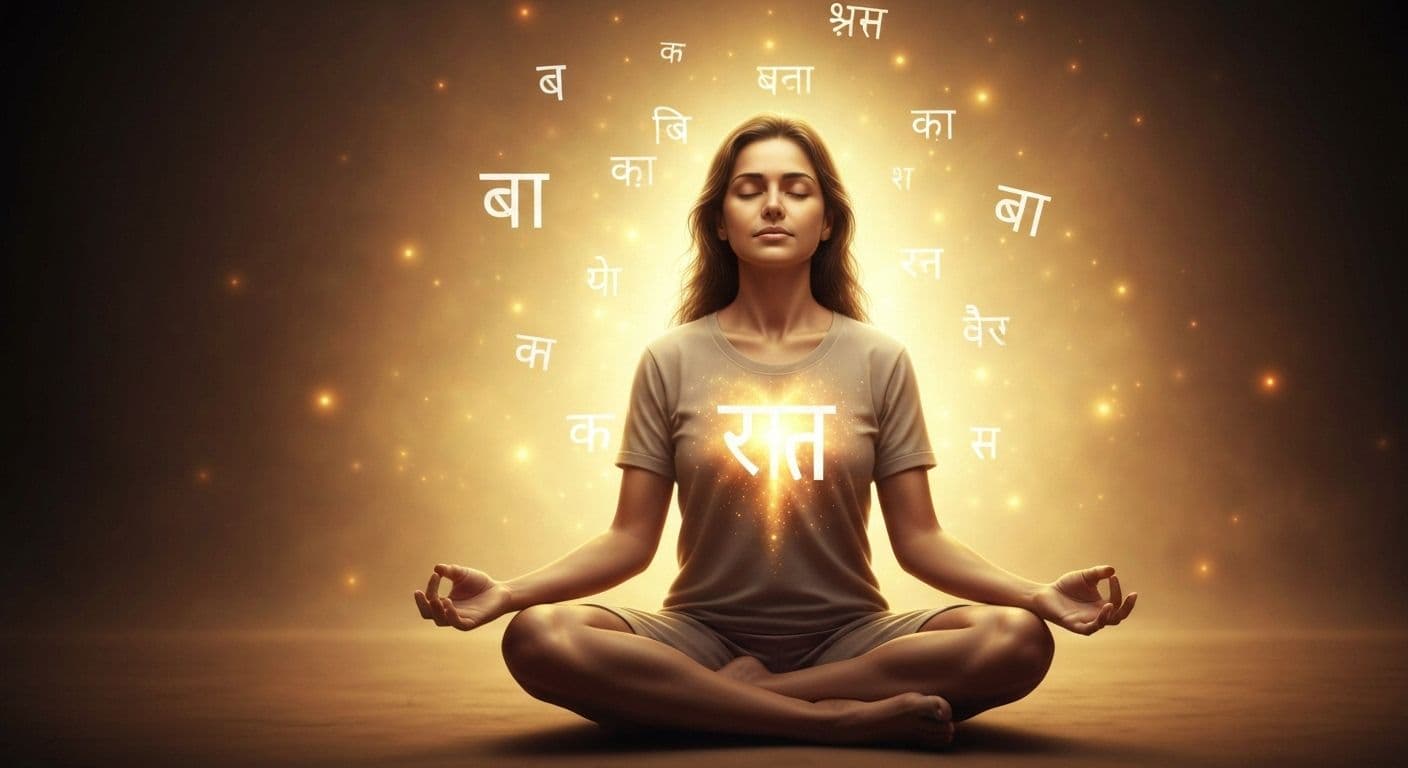
Why Mindfulness in Hindi Creates Deeper Emotional Connection
You're sitting cross-legged, eyes closed, following along with a mindfulness meditation. The instructor's soothing voice guides you: "Notice your thoughts without judgment." But something feels off. The words don't quite land. They float on the surface, clinical and distant. Now imagine the same instruction in Hindi: "Apne vicharon ko bina kisi nirnay ke dekhiye." Suddenly, something shifts. The words resonate deeper, touching a part of you that English couldn't reach. This isn't coincidence—it's neuroscience. For Hindi speakers, practicing mindfulness in hindi creates an authenticity that transcends mere translation, connecting directly with your emotional core in ways that foreign languages simply cannot replicate.
The power of mindfulness in hindi lies in how your brain processes emotional content differently in your mother tongue versus learned languages. When you practice mindfulness techniques in your native language, you're working with your brain's natural wiring rather than against it. This linguistic advantage transforms your entire practice from a mental exercise into a deeply felt experience.
The Brain Science Behind Mindfulness in Hindi
Your brain doesn't process all languages equally. Neuroscientific research reveals that the amygdala—your brain's emotional processing center—responds faster and more intensely to words in your native language. When you hear "chinta" (worry) versus "anxiety," your brain's emotional response to the Hindi word activates milliseconds faster, triggering a more authentic emotional recognition.
This neurological reality means that practicing mindfulness in hindi bypasses the translation barrier entirely. When you think in English during meditation, your brain performs an extra step: translating concepts into your emotional language before processing them. This creates a subtle disconnect, like watching a movie dubbed in another language—technically accurate but emotionally muted.
Hindi words carry emotional weight accumulated through years of lived experience. "Shanti" isn't just peace—it's the feeling of your grandmother's prayer room, the calm after monsoon rains, the stillness of early morning chai. These embedded associations make hindi mindfulness practice inherently richer because every word arrives pre-loaded with personal and cultural significance that English equivalents lack.
The prefrontal cortex, responsible for self-awareness and emotional regulation, works more efficiently when processing native language input. This efficiency means that best mindfulness in hindi practices help you achieve deeper states of awareness with less cognitive effort, making your practice more sustainable and effective over time.
Cultural Concepts That Make Mindfulness in Hindi More Authentic
Hindi contains wisdom-rich concepts that resist translation. Consider "sahaj"—a word encompassing naturalness, ease, and spontaneity simultaneously. English requires multiple words to approximate its meaning, but in Hindi, it captures the essence of mindful living in a single breath. When you practice mindfulness in hindi using such terms, you're accessing centuries of philosophical understanding embedded in the language itself.
The word "dhyan" illustrates this perfectly. While often translated as "meditation," dhyan carries connotations of focused awareness, contemplation, and absorbed attention that "meditation" doesn't fully capture. Using dhyan in your practice connects you to a rich tradition of introspection that feels culturally authentic rather than imported.
English mindfulness terminology often feels clinical—"observe your breath," "notice sensations," "acknowledge thoughts." These phrases work functionally but lack soul. Compare this to Hindi phrases like "saans ki yatra ko mehsoos karein" (feel the journey of your breath). The Hindi version transforms a mechanical instruction into a poetic invitation, making effective mindfulness in hindi naturally more engaging.
Words like "mamta" (loving-kindness), "karuna" (compassion), and "kshamta" (capacity) carry cultural context that enriches your understanding. These aren't just vocabulary—they're emotional health concepts your ancestors understood, making your mindfulness in hindi practice feel like coming home rather than learning something foreign.
Starting Your Mindfulness in Hindi Journey Today
The evidence is clear: practicing mindfulness in hindi offers Hindi speakers profound advantages in emotional connection, cognitive processing, and cultural authenticity. Your mother tongue isn't just a communication tool—it's the language of your deepest emotions, your earliest memories, and your truest self-expression.
Ready to experience this deeper connection? Start with one simple mindfulness in hindi technique today. Close your eyes and silently repeat "main yahaan hoon" (I am here) with each breath. Notice how different this feels compared to "I am here." The Hindi phrase resonates differently, anchoring you more firmly in the present moment because it speaks the language your heart understands.
This isn't about rejecting English resources—it's about honoring your linguistic identity in your wellness practice. When you practice mindfulness in hindi, you're not translating someone else's wisdom—you're accessing timeless insights through the language that shaped your worldview. Your brain works faster, your emotions respond deeper, and your practice becomes authentically yours. Let your mother tongue guide you toward the shanti, dhyan, and sahaj you've been seeking all along.



